
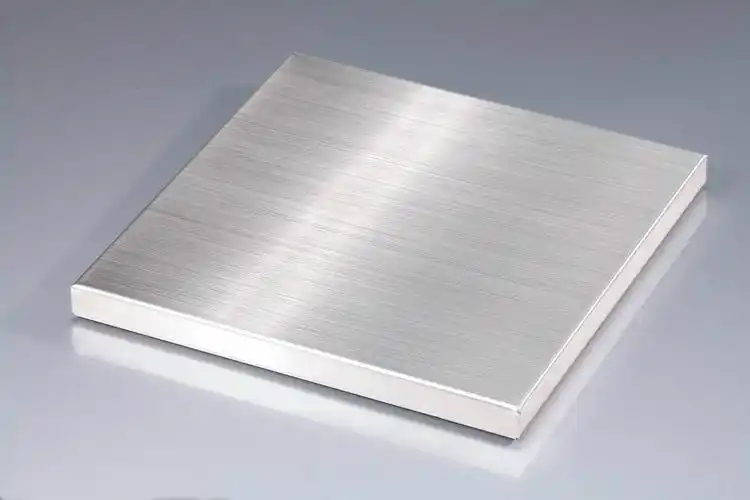
429 stainless steel is a ferritic stainless steel containing approximately 15% chromium and small amounts of other alloying elements. It is characterized by good corrosion resistance and a low coefficient of thermal expansion, and is commonly used in applications requiring high-temperature resistance, such as automotive exhaust pipes and heat exchangers. 429 grade is relatively inexpensive and offers good machinability, making it a cost-effective choice.
429 Stainless Steel Chemical Composition
- Chromium: 14.0-16.0
- Silicon: 1.00
- Manganese: 1.00
- Carbon: 0.12
- Phosphorous: 0.040
- Sulfur: 0.030
- Iron: Balance
429 Stainless Steel Mechanical Properties
- Tensile Strength: ≥450 MPa
- Yield Strength: ≥205 MPa
- Elongation: ≥22%
- Hardness (HBW): ≤183
Physical Properties
- Density: 7.7 g/cm³ (20°C).
- Modulus of elasticity: Approximately 200 GPa (20°C).
- Thermal Conductivity: Approximately 26 W/(m·K) (100°C), thermal conductivity is superior to that of 304/316.
- Coefficient of Linear Expansion: 10.3×10⁻⁶/K (0–100°C), 11.9×10⁻⁶/K (0–576°C).
- Electrical Resistivity: 0.59 Ω·mm²/m (20°C).
- Magnetic Properties: Magnetic, this is a common characteristic of ferritic stainless steels.
- Specific Heat Capacity: Approximately 0.46 kJ/(kg·K) (0–100°C).
- Melting Point: Approximately 1420–1530°C.
429 Stainless Steel Quivalent
- GB: 10Cr15
- UNS: S42900
- JIS: SUS429
- ISO: X10Cr15
- EN: 1.4012
Key Characteristics
- Material Type: Ferritic stainless steel, nickel-free or low-nickel (≤0.75%), low cost, and magnetic.
- Welding Advantages: Resistant to intergranular corrosion and heat-affected zone embrittlement after welding; typically requires no post-weld heat treatment.
- Corrosion and Heat Resistance: Offers good resistance to corrosion in atmospheric environments, fresh water, and general chemical media; possesses excellent oxidation resistance, high-temperature strength, and heat fatigue resistance, making it suitable for high-temperature environments such as exhaust systems.
- Physical Properties: High thermal conductivity, low thermal expansion coefficient (close to that of carbon steel), strong resistance to welding distortion, and good formability.
- Mechanical Properties: Moderate strength in the annealed condition (tensile strength approximately 450 MPa), elongation approximately 22%; hardness can be increased through cold working.
Applications
- Automotive Exhaust Systems: The most typical application; suitable for high-temperature components such as exhaust manifolds, exhaust pipes, and muffler housings, offering excellent resistance to thermal fatigue and high-temperature oxidation.
- Chemical and Energy Equipment: Used in chemical processing equipment, oil and gas transmission pipelines, heat exchanger tube sheets, and heavy oil burner components; resistant to mildly corrosive media and high-temperature oxidizing atmospheres.
- Food Processing and Marine Applications: Suitable for food processing equipment, marine propellers, bearings, and other components; provides adequate corrosion resistance against fresh water, atmospheric exposure, and mildly corrosive environments.
- Construction and Home Appliances: Used in elevator cabs, handrails, interior trim panels, as well as washing machine drums, dishwasher components, kitchen sinks, and more.
- Welded Structural Components: Due to their low carbon and nitrogen content, the risk of intergranular corrosion and heat-affected zone embrittlement after welding is minimal, making them suitable for batch production projects requiring continuous welding, such as welded tanks, heat exchanger shells, and building envelope components.
References
- ASTM A240 – Standard Specification for Chromium and Chromium-Nickel Stainless Steel Plate, Sheet, and Strip for Pressure Vessels and for General Applications
- ASTM A276 – Standard Specification for Stainless Steel Bars and Shapes
- ASTM A 314 – Standard Specification for Stainless Steel Billets and Bars for Forging
- ASTM A473 – Stainless Steel Forgings
- ASTM A 493 – Standard Specification for Stainless Steel Wire and Wire Rods for Cold Heading and Cold Forging
- ASTM A554 – Welded Stainless Steel Mechanical Tubing
- ASTM A959 – Specifying Harmonized Standard Grade Compositions for Wrought Stainless Steels
- Ferritic Stainless Steel
- Automotive Exhaust Tubing